

Online reputation management Dubai: the practical approach
Online reputation management is not a campaign to make every negative comment disappear. For a Dubai business, it is the operating discipline used to detect customer issues, verify what happened, respond in the right channel, escalate legal or safety risks, correct the underlying service problem, and publish enough credible evidence for customers to make an informed decision. Search results, Google Business Profile reviews, social posts, marketplace ratings, news coverage, forums, employee commentary, and direct-message screenshots can all shape that decision.
A recovery playbook matters because the first response is often written under pressure. Without clear ownership, a team may ignore a genuine complaint, post a defensive reply, disclose private customer information, promise a refund it cannot approve, or ask friends and employees to flood a platform with positive reviews. Those reactions can create a larger reputation problem than the original review. A documented process slows the emotional response while speeding up the operational response.
This guide is designed for UAE founders, marketing leaders, customer-service teams, and multi-location operators comparing online reputation and local visibility support. It focuses on legitimate review recovery and trust rebuilding. It is not legal advice, and serious allegations, threats, privacy incidents, regulatory questions, or active disputes should be routed to qualified legal and compliance advisers.
- Monitor named channels and capture evidence before posts are edited or deleted.
- Classify each issue by credibility, customer harm, visibility, urgency, and legal or safety risk.
- Respond publicly with empathy, a verified fact boundary, and a private resolution path.
- Move account-specific details off the public thread and protect personal information.
- Fix the operational cause, not only the wording of the reply.
- Ask for honest feedback consistently; never buy, gate, or manufacture reviews.
- Measure response time, resolution time, repeat-issue rate, review themes, and service improvements.

Table of contents
- What reputation recovery can and cannot do
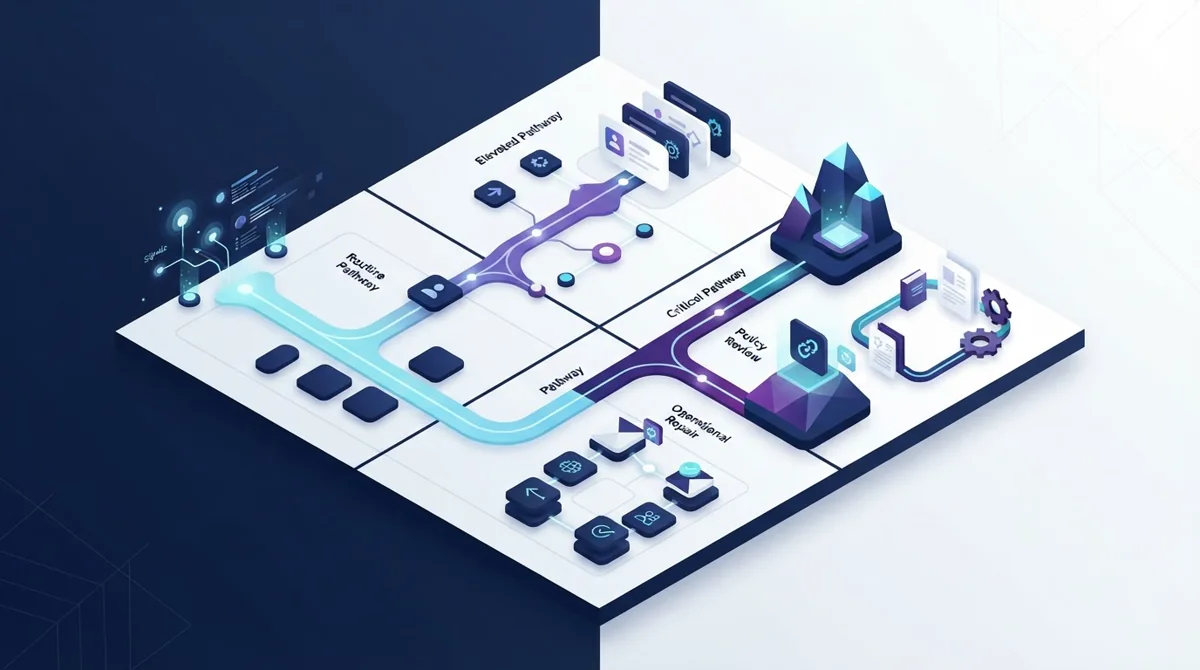
- The four-stage recovery workflow
- Response-priority matrix
- How to write public responses
- Crisis escalation and governance
- Trust rebuilding, KPIs, checklist, and FAQs
What reputation recovery can and cannot do
A sound programme can improve detection, response quality, resolution consistency, local-review operations, stakeholder confidence, and the amount of accurate information available about the business. It can identify repeated complaints that point to a broken handoff, misleading offer, slow response, product defect, delivery problem, or staff-training gap. It can also create a reliable evidence trail showing when the business received an issue, who investigated it, what action was approved, and whether the customer was offered a fair remedy.
It cannot guarantee removal of truthful criticism, control every search result, or force a platform to accept the company’s preferred interpretation. Removal requests should be reserved for content that genuinely violates a platform policy, such as spam, impersonation, prohibited personal information, or content unrelated to an actual experience. A disagreement with a low rating is not itself a policy violation. When a review is authentic, the stronger strategy is normally to address the experience, respond proportionately, and prevent recurrence.
Reputation work also cannot replace customer service. A polished reply followed by silence in email or WhatsApp damages trust. The public response and the private recovery workflow must be connected. If a restaurant says it will investigate but has no shift record, refund authority, or escalation owner, the message is only cosmetic. If a B2B provider invites a client to discuss an invoice dispute but the account team never calls, the second failure may become another public complaint.
The four-stage review recovery workflow
Stage 1: monitor, capture, and verify
Start with an owned channel map. List the Google Business Profile for every location, priority social profiles, major marketplaces, app stores, relevant industry directories, high-visibility forums, press mentions, and branded search terms. Assign a primary and backup owner for each channel. Record how frequently it is checked, which alerts are enabled, where evidence is stored, and who has permission to reply. Passwords and administrator ownership should remain under business control rather than a former employee or external supplier.
When an issue appears, preserve the URL, platform, timestamp, username as publicly shown, screenshots, rating, exact text, and any visible transaction clues. Do not copy unnecessary personal data into a shared marketing document. Search internal records only with authorized staff and a legitimate purpose. Verification should answer a short set of questions: can the experience be matched to a real interaction, what facts are confirmed, what remains uncertain, has the customer contacted support, and is there immediate safety, fraud, privacy, or legal risk?
Monitoring should also detect positive and neutral feedback. A team that only wakes up for one-star reviews will miss recurring compliments, product questions, and early warning signals in three-star feedback. Theme tagging makes the data useful: response delay, staff conduct, quality, billing, fulfilment, cleanliness, product accuracy, accessibility, communication, or another business-specific category. The objective is not surveillance; it is a focused operating view of the channels that influence customers.
Stage 2: triage by risk and urgency
Not every comment deserves the same speed or seniority. A vague complaint with low visibility may need a calm customer-service response. A credible allegation involving safety, discrimination, fraud, private information, a public figure, media interest, or coordinated amplification needs immediate escalation. Triage should consider five factors: potential harm, factual credibility, audience reach, rate of spread, and the company’s ability to resolve the issue quickly.
Create clear severity levels. Level one covers routine dissatisfaction that a trained service owner can handle. Level two covers repeated complaints, high-value customers, operational breakdowns, or posts gaining unusual attention and requires a manager. Level three covers safety, legal, regulatory, privacy, employee conduct, media contact, or a rapidly spreading claim and requires an incident lead plus legal or executive review. A level should determine the response target, approval path, evidence standard, and communication channel.
| Priority | Typical signal | First action | Public response approach |
|---|---|---|---|
| Routine | Specific service complaint, low spread, no safety or privacy issue. | Verify the interaction and assign a service owner. | Acknowledge, apologize for the experience where appropriate, and offer a direct resolution route. |
| Elevated | Repeated theme, influential account, unresolved customer, or fast-growing engagement. | Manager reviews evidence and coordinates operations with communications. | Respond promptly with a fact boundary, named next step, and one accountable contact. |
| Critical | Safety, fraud, discrimination, private data, legal threat, regulator, media, or coordinated crisis. | Activate incident lead; preserve evidence; involve legal, compliance, security, and leadership as required. | Use an approved holding statement; avoid speculation; give the next verified update point. |
| Likely spam or policy violation | No plausible experience, duplicate network, prohibited content, impersonation, or exposed personal data. | Document the policy basis and submit a platform report. | Do not start an argument; respond only if a calm clarification helps real readers. |
Stage 3: respond and recover the customer relationship
A useful public response has four parts: recognition, responsibility for the next step, a privacy-safe path to resolution, and a realistic expectation. Recognition does not require admitting an unverified allegation. It can say the team is sorry the experience caused concern and wants to investigate. Responsibility means naming what will happen next, such as asking the location manager to review the order record. The private path should be specific—a monitored email, form, direct message, or phone line—not a generic request to “contact us” with no owner.
Keep the public reply concise. Do not publish order numbers, health details, employee records, phone numbers, account balances, or other personal information. Do not debate every sentence. If the company made a clear mistake, say what is being corrected without turning the reply into promotional copy. If facts are disputed, state only what is verified and move the evidence exchange to a private channel. If abuse or threats are present, preserve them and use the platform’s safety controls instead of matching the tone.
The private recovery step needs decision rights. Define who can approve a replacement, refund, service redo, account credit, escalation call, or written explanation. Set time limits and handoff rules. The customer should not repeat the story to five people. After resolution, it is acceptable to invite the customer to update their review if they choose, but the remedy must never depend on changing or deleting the review. The business should not draft the customer’s praise or pressure them to increase a rating.
Stage 4: rebuild trust and prevent recurrence
Recovery is complete only when the root cause receives an owner. Run a lightweight review after meaningful incidents: what happened, why the normal control failed, how the customer experienced the failure, what immediate correction was made, what systemic action will prevent recurrence, and how effectiveness will be checked. Actions may include clearer sales wording, revised delivery estimates, additional approval controls, staff coaching, better call routing, product-page corrections, a refund policy update, or a change to vendor management.
Trust rebuilding should use real proof. Publish accurate service explanations, current contact details, case studies with permission, staff expertise, verified certifications, transparent policies, and practical answers to common customer questions. A broader digital marketing system in Dubai can help align search, social, local profiles, website content, and customer journeys, but consistency matters more than volume. One well-documented improvement is more credible than dozens of vague posts claiming excellence.
Request reviews through a consistent, neutral process after genuine interactions. The invitation should not screen out unhappy customers, offer rewards for positive sentiment, or ask only selected customers to post publicly while routing others elsewhere. A steady flow of honest feedback produces a more trustworthy profile and better operational learning than a sudden burst of suspicious five-star ratings.
How to write a public response without making the issue worse
Start by writing for two audiences: the person who complained and future customers reading the exchange. The complainant needs to see that the issue was heard and has a route forward. Future customers need evidence of calm process, respect, and accountability. Avoid corporate filler such as “we take all feedback seriously” unless the next sentence proves what the team will do. Avoid defensive phrases such as “you are wrong,” “this never happens,” or “our many happy customers disagree.”
A routine response can follow this structure: “We are sorry this experience did not meet the standard you expected. We would like to verify the details and have the location manager review what happened. Please send the date and the best contact method through [private channel], referencing this review. We will confirm the next step within [realistic timeframe].” Adapt the wording to facts and local operations; do not copy the same paragraph under every review.
For an elevated issue, add ownership: “Our operations manager is reviewing this today. To protect your privacy, we will not discuss account details publicly. Please use [channel], and we will provide a verified update by [time].” For a critical issue, use a holding statement approved by the incident team: acknowledge awareness, state the immediate protective action if verified, avoid speculation, and provide the next update point. Silence can create an information vacuum, but an inaccurate fast statement can create legal and trust risks.
Governance for a Dubai reputation programme
Create a responsibility map before a crisis. Customer service owns routine investigation and resolution. Operations owns root-cause correction. Marketing or communications owns channel consistency and public wording. Legal, compliance, HR, information security, or leadership enter when their thresholds are met. One incident lead coordinates the timeline so separate teams do not publish conflicting replies. Agencies may monitor, draft, and report, but the business should retain account ownership, factual approval, and final authority for sensitive cases.
Build a response library as guidance, not automation. It should contain tone principles, privacy rules, prohibited promises, platform escalation links, severity definitions, approval contacts, and examples for common issue types. Review it after real cases. AI can help categorize themes or draft a first version, but a trained human should verify facts, personal-data boundaries, cultural context, and legal sensitivity before publication. Never feed confidential case details into an unapproved system.
Platform policies change, so use official guidance for current actions. Google explains how businesses can read and reply to reviews, how to report inappropriate reviews, and the policies that apply to contributed content. The UAE Government consumer-protection information is a useful starting point for understanding the wider environment, but obtain qualified advice for a specific dispute or regulated sector.
KPIs that show whether reputation recovery is improving
Do not use average star rating as the only KPI. Track median time to acknowledge, median time to resolve, percentage of cases resolved within the promised window, repeat-issue rate by theme, escalation volume, unresolved critical cases, review-response coverage, and the percentage of operational actions completed. For multi-location businesses, compare locations carefully and investigate process differences rather than rewarding teams for pressuring customers.
Add qualitative measures. Was the response specific? Did it protect privacy? Did the customer have one accountable contact? Was a policy or service fix completed? Did the same complaint decline after the fix? Search visibility and sentiment can be monitored, but they should be connected to actual customer experience. A rating that improves while complaint themes continue is not a healthy recovery.
- Map priority review, social, marketplace, press, and branded-search channels.
- Confirm business ownership and secure administrator access for every profile.
- Name primary and backup monitoring owners with realistic coverage windows.
- Create severity levels, escalation thresholds, and approved response times.
- Define a privacy-safe evidence record and case identifier.
- Write routine, elevated, and critical response guidance.
- Give service owners clear authority for common remedies.
- Connect review themes to an operational root-cause log.
- Set neutral review-request rules and prohibit incentives or review gating.
- Create a weekly dashboard for response, resolution, repeated themes, and overdue actions.
- Run a simulation for one routine and one critical scenario.
- Review the playbook after the first month and update weak handoffs.
Common reputation management mistakes and fixes
Mistake: replying while angry. The response becomes evidence of the company’s behaviour. Fix it with a pause, a severity check, and a second reviewer for elevated cases. Mistake: using identical copy. Customers see automation rather than attention. Fix it with a flexible structure and case-specific next step. Mistake: arguing about private facts in public. Fix it by stating the privacy boundary and moving verification to a secure channel.
Mistake: reporting every negative review as fake. Platforms require a policy basis, not discomfort. Fix it by separating authentic complaints, uncertain cases, and clear policy violations. Mistake: buying positive reviews. It creates policy, trust, and governance risk. Fix it with neutral requests after genuine interactions. Mistake: measuring replies but not operational fixes. Fix it by linking every repeated theme to an accountable corrective action.
Frequently asked questions
Can a reputation management agency remove negative reviews?
An agency can help document and report content that violates a platform policy, but it cannot legitimately guarantee removal of truthful criticism. Authentic feedback should normally be investigated, answered proportionately, and used to improve the underlying customer experience.
How quickly should a Dubai business reply to a negative review?
Use a severity-based target rather than one promise for every case. Routine issues may be acknowledged within a defined business window, while safety, privacy, legal, or rapidly spreading allegations need immediate escalation. Speed should not come at the expense of factual accuracy.
Should we apologize if the facts are not confirmed?
You can acknowledge the person’s concern and express regret that the experience caused frustration without admitting an unverified allegation. State that the team will investigate, protect private details, and provide a clear route and timeframe for the next step.
Can we ask a customer to change a review after resolution?
You may neutrally invite the customer to update the review if they wish, but do not make the remedy conditional on deletion or a higher rating. Do not draft praise for the customer or apply pressure.
What should be escalated to legal or leadership?
Escalate credible safety, fraud, discrimination, privacy, regulatory, employment, defamation, litigation, media, and rapidly spreading crisis risks according to a pre-agreed threshold. Sector-specific obligations may require additional compliance owners.
How long does reputation recovery take?
Routine review operations can improve within weeks, but trust recovery depends on the severity of the issue, search visibility, response quality, operational correction, and the pace of new credible evidence. Treat it as an ongoing operating system rather than a short suppression campaign.
Build a response system customers can trust
The strongest reputation strategy is inspectable. It shows who monitors, who verifies, how risk is classified, how privacy is protected, what remedy can be offered, when leadership enters, and whether the operational cause was fixed. That system will not prevent every complaint, but it makes the business faster, fairer, and more consistent when a difficult moment arrives.
Media87 can map your priority channels, response ownership, escalation workflow, local visibility, and content gaps, then build a practical reputation-management plan around your real customer journey.
Contact Media87 to review the current reputation risks and next actions.